

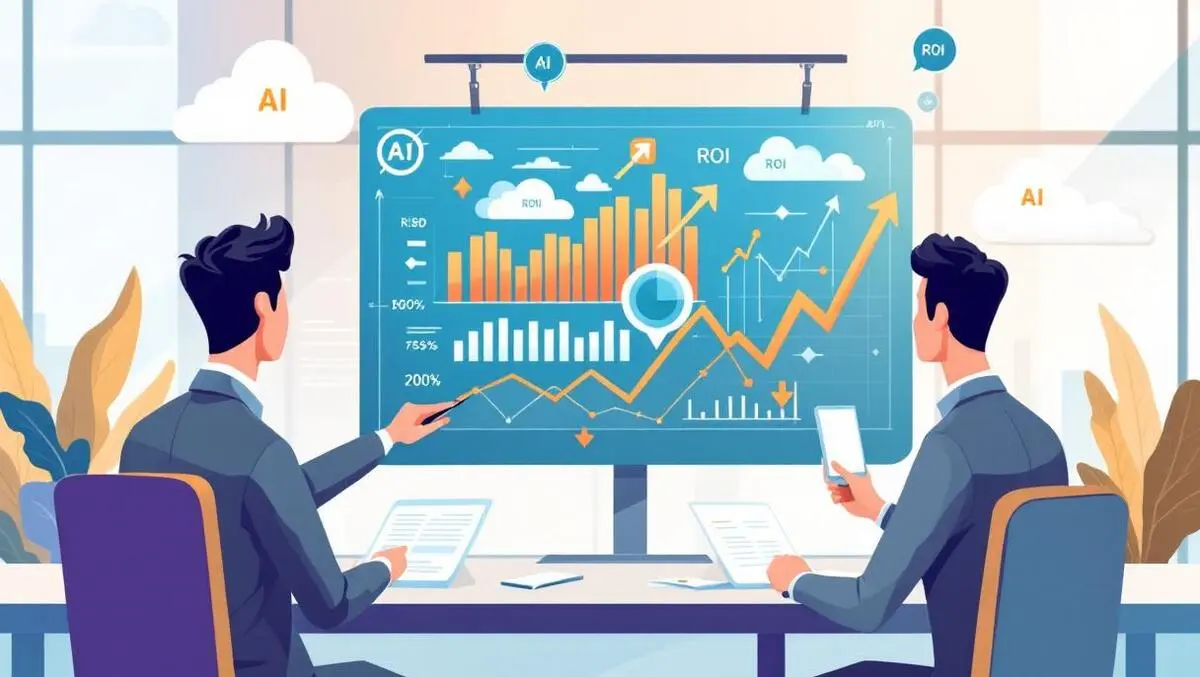
AI adoption to double ROI by 2026 amid rising cloud costs
Fri, 21st Nov 2025
Generative artificial intelligence (AI) is set to deliver tangible returns for businesses in 2026, but only for those organisations that pursue its adoption with clear focus and discipline, according to Harness Field CTO, Martin Reynolds.
AI returns
After a period of widespread experimentation, where many businesses trialled AI tools in a scattergun approach, attention is turning to more purposeful integration. The anticipated gains are underpinned by a shift towards applying AI in targeted back-office scenarios rather than flashy front-end features. According to Reynolds, businesses currently see around a 16 per cent return on investment from AI programmes. This figure is projected to double over the next two years as implementations mature and become more directed.
"Early evidence shows businesses using purpose-built AI tools from specialised vendors outperform those using their own in-house builds by a factor of two. Organisations that consolidate AI into platforms and invest in solving real problems will see measurable returns in 2026, proving that a disciplined, focused approach holds the key to finally unlocking AI's potential," said Reynolds.
Supply chain risks
The security of the software supply chain faces new challenges as AI-generated code becomes more prevalent. Reynolds highlights that many AI development tools are trained on historical codebases without real-time awareness of known security vulnerabilities, potentially leading to vulnerable or non-compliant code ending up in production systems. AI-generated suggestions often come without detailed provenance, making it difficult to trace and audit code origins.
Developers are at risk of introducing vulnerabilities similar to those in previous high-profile incidents, where compromised components had a widespread impact. In response, scalable, automated security measures such as Software Composition Analysis and automated policy enforcement are predicted to become standard practice.
Cloud expenditures
Enterprise spending on cloud computing is set to rise significantly, driven by the volume of AI and machine learning workloads. Without adequate oversight and controls, organisations could face overspending by as much as 50 per cent. Reynolds points out the need to shift from periodic cloud expenditure reports to real-time cost monitoring and automation.
Real-time anomaly detection and automated optimisation, enabled by AI techniques, will allow businesses to adjust resource allocations dynamically, cut waste, and prevent unexpected costs.
Strengthened governance
Regulatory pressures are also mounting, with frameworks such as the EU AI Act and new US regional laws demanding increased transparency and algorithm accountability. As the adoption of AI-generated code increases, so do the associated risks: research indicates up to 45 per cent of this code may harbour vulnerabilities.
To cope, companies will need to embed automated policy enforcement, continuous security scanning, and maintain comprehensive audit trails across their development ecosystems. Automated testing and runtime verification are expected to become more widely implemented to keep development secure and compliant as AI integration expands.
Quality control focus
The use of AI in software development will expand beyond assisting with code writing, extending into quality assurance and automated incident resolution. Reynolds says that bottlenecks in testing and error have offset the speed advantages of AI coding resolution areas now set for greater automation, thanks to multi-agent AI pipelines. Such systems will be capable of predicting failures, optimising deployments, and autonomously resolving incidents.
Reynolds notes the potential impact of these trends: "This will be a real breakthrough for AI-assisted development in 2026, building trust in AI across the SDLC and ushering in a wave of automated processes that no longer require a human in the loop."