Clutch launches solid-state portable batteries & power hub
Thu, 26th Nov 2026 (Today)
Clutch Industries has launched three portable power products through its battery division, Density Batteries. Two use the company's X3 solid-state battery technology.
The range includes the X3 PowerBank 5K, the X3 PowerHub Nano and the X2 PowerHub Pro. Best known for automotive clutch products, Clutch is using the launch to expand into consumer and portable energy storage.
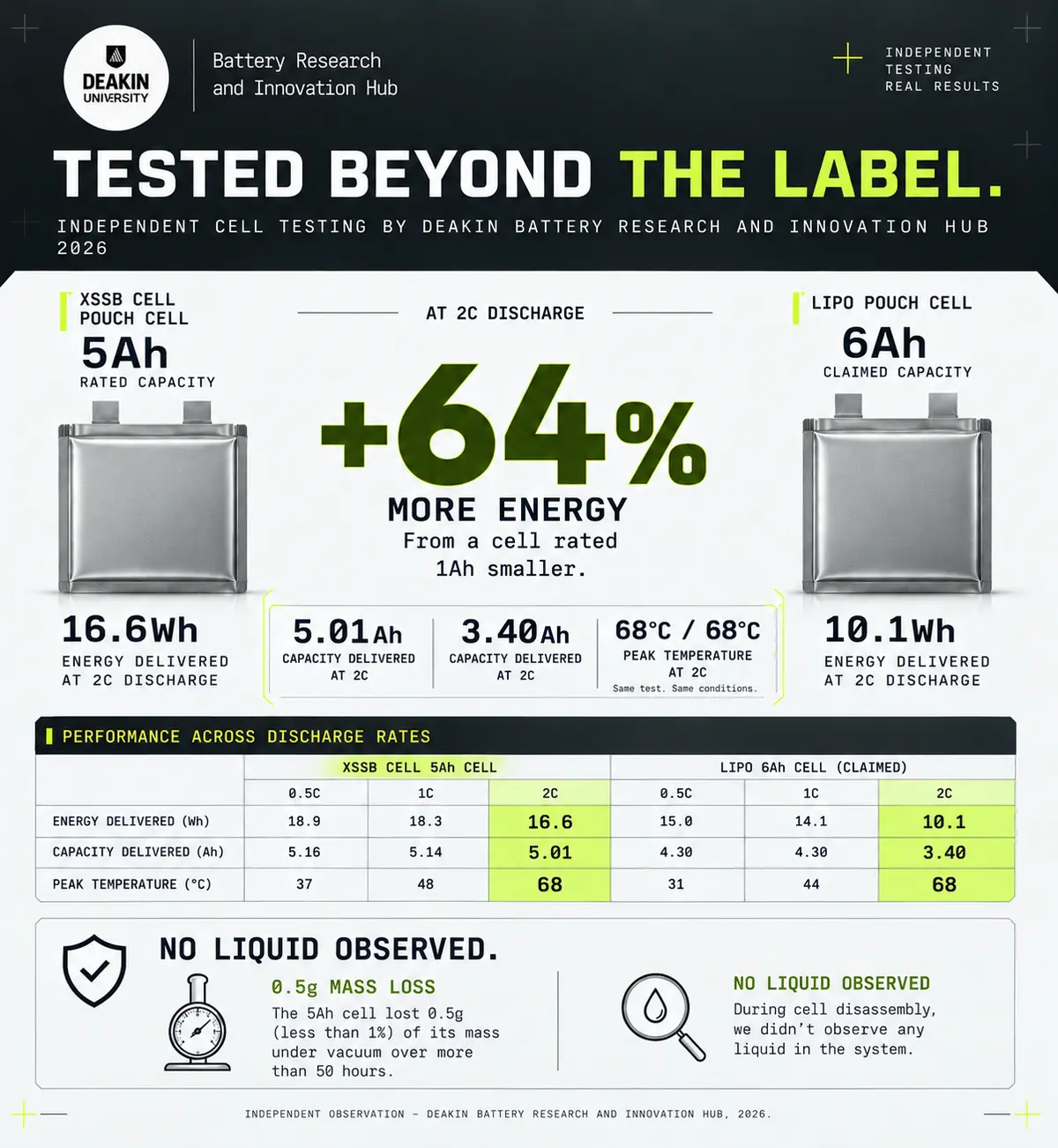
Independent testing by Deakin University compared one of Density's X3 cells with a lithium-polymer cell. In a discharge test, a 5 Ah X3 cell delivered 215 watt-hours per kilogram, while the 6 Ah lithium-polymer cell tested alongside it delivered 156 Wh/kg.
Under those conditions, the X3 cell produced about 38% more energy per kilogram. Clutch said the result points to a weight advantage for portable devices, where capacity and portability are closely linked.
Deakin University's Battery Research and Innovation Hub also examined the cell's structure. Researchers held a 5 Ah X3 pouch cell under vacuum for more than 50 hours and found it lost about half a gram, less than 1% of its mass.
When they opened the cell, they reported seeing no liquid inside. That is notable because standard lithium-ion cells commonly contain a flammable liquid electrolyte.
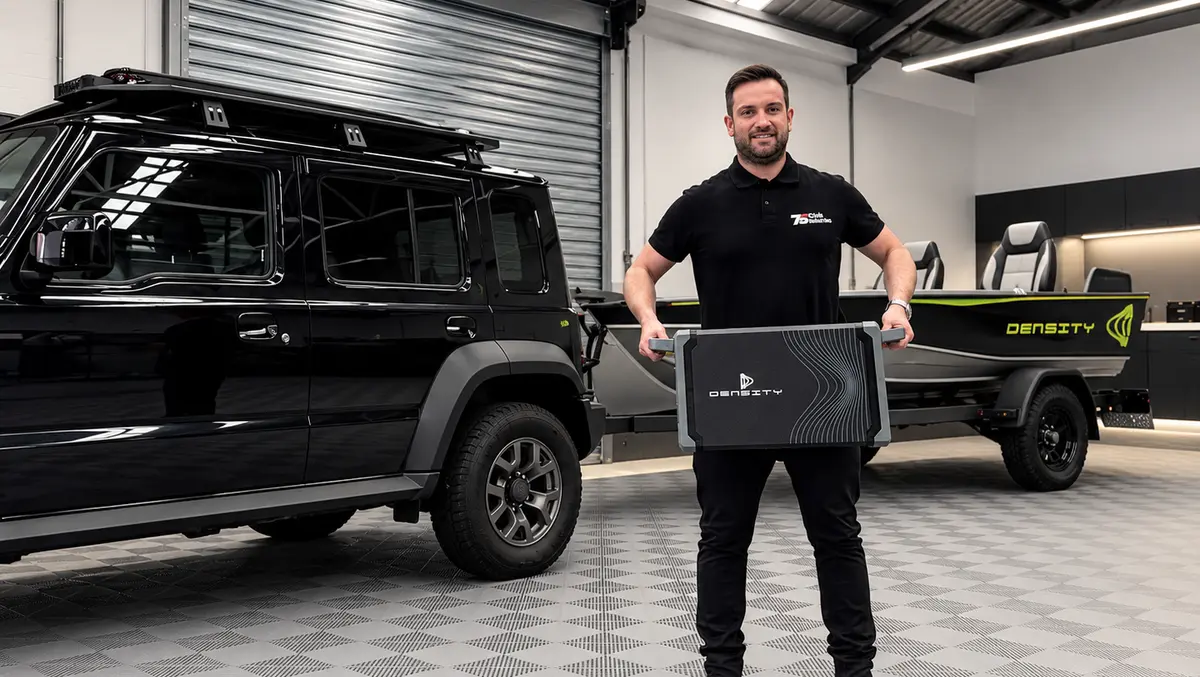
Justin Batten, General Manager - Sales at Clutch Industries, said the move reflects a practical design challenge rather than simply a shift in brand identity.
"For 75 years, people have known us for what goes between an engine and a gearbox," Batten said.
"In a vehicle, you've got a fixed amount of space to work with. With a portable battery, it comes down to how much you're willing to carry. If it makes your camera bag too heavy, it stays at home, regardless of what it can do."
Product range
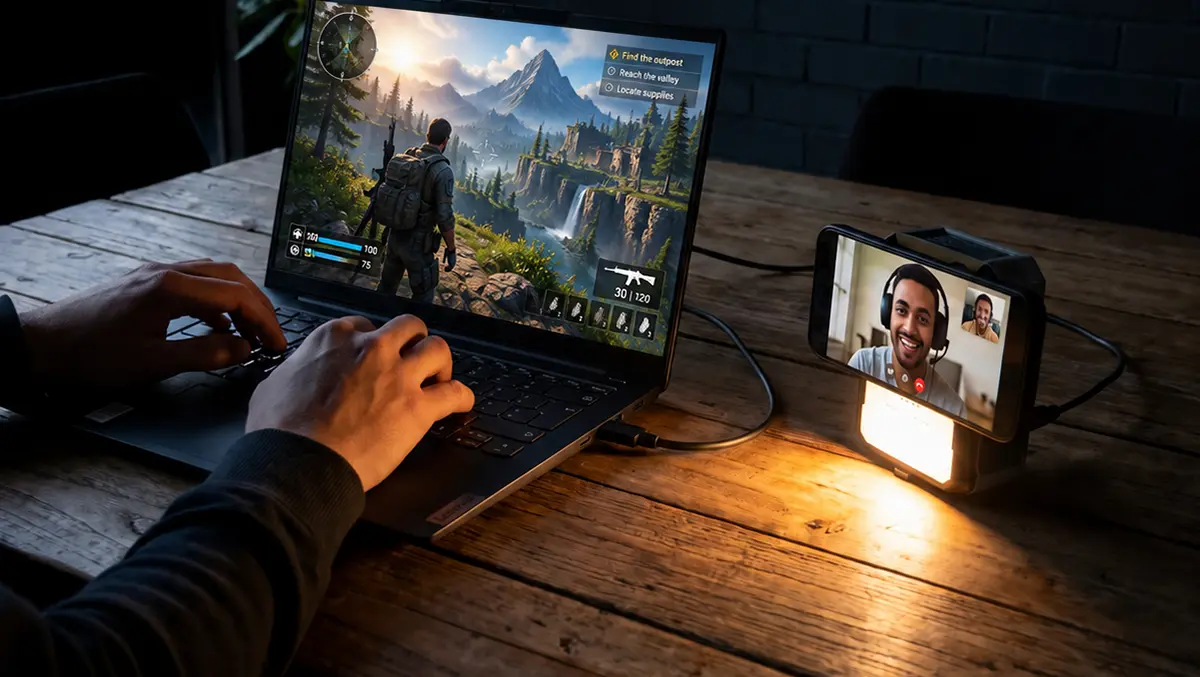
The X3 PowerHub Nano stores 99 Wh and weighs 570 grams, including its enclosure, touchscreen, light and charging electronics. It includes 100 W and 65 W USB-C ports, as well as USB-A ports and wireless charging, allowing two compatible laptops, two phones and a third wirelessly charged phone to draw power at the same time.
The unit can deliver up to 200 W combined. Users can monitor output on the touchscreen and adjust the built-in light.
The smaller X3 PowerBank 5K uses the same X3 battery technology. The magnetic unit is 7.2 mm thick, has a 5,000 mAh rating and can remain attached to a compatible phone while in use, delivering up to 15 W wirelessly or 22.5 W through USB-C.
At the larger end of the range, the X2 PowerHub Pro stores 2.8 kWh in a 19.5 kg unit. It offers three Australian outlets with up to 2,400 W of AC output and 12 V connections suited to equipment such as a camping fridge.
The PowerHub Pro can be recharged from mains electricity or compatible solar panels, placing it in the market for home backup and off-grid recreational use.
Manufacturing plans
Alongside the product launch, Clutch has secured AUD $6.77 million from the Australian Renewable Energy Agency toward a AUD $19.35 million project at its Coburg North site in Victoria. The funding will support the establishment and commissioning of a manufacturing line for PowerNet, the company's modular battery platform.
Each PowerNet unit is designed to store about 4 kWh, weigh about 20 kg and deliver up to 12 kW of DC power. The proposed line would mark a further step in Clutch's efforts to build out battery manufacturing at the Melbourne site.
Batten linked the project to broader use cases across domestic backup and mobile applications.
"People hear 'solid-state' and quite reasonably ask what that means for the battery in their pocket," Batten said.
"That's why we've published what the lab did and what the researchers saw when they opened the cell. Safety also comes down to how we build the product around that cell, from protecting it against damage to managing heat while it charges."
He also outlined how the modular platform could be used across different settings.
"A family might buy one battery to keep at home in case of a blackout and another for the caravan, then leave one sitting idle while they use the other," Batten said.
"With PowerNet, we want that same battery to do both jobs. You could use it with an inverter for backup power at home, then take it away in the caravan on Friday. With up to 12 kW of DC output, there's scope to power an electric outboard or, with an inverter, run equipment you'd usually take a generator for."