

Ericsson launches W2255 5G adapter for enterprise WAN
Thu, 14th May 2026
Ericsson has launched the Cradlepoint W2255 5G adapter and updated its NetCloud wireless WAN orchestration tools for distributed enterprise networks.
The move reflects a broader shift as businesses increasingly treat wireless WAN as core network infrastructure rather than a standby link. Rising costs from network outages are prompting companies to reassess how they connect branch sites, remote locations and edge operations.
The W2255 combines 5G connectivity with support for Low Earth Orbit satellite links and is designed for both indoor and outdoor use. It uses a single form factor for office deployments and harsher environments, with an IP67-rated enclosure built to withstand outdoor conditions.
Ericsson has also expanded NetCloud orchestration to give IT teams a central view of wireless and satellite connections, carrier profiles, applications, security events and connected cell towers. The update is intended to help organisations manage deployment and troubleshooting across large numbers of sites.
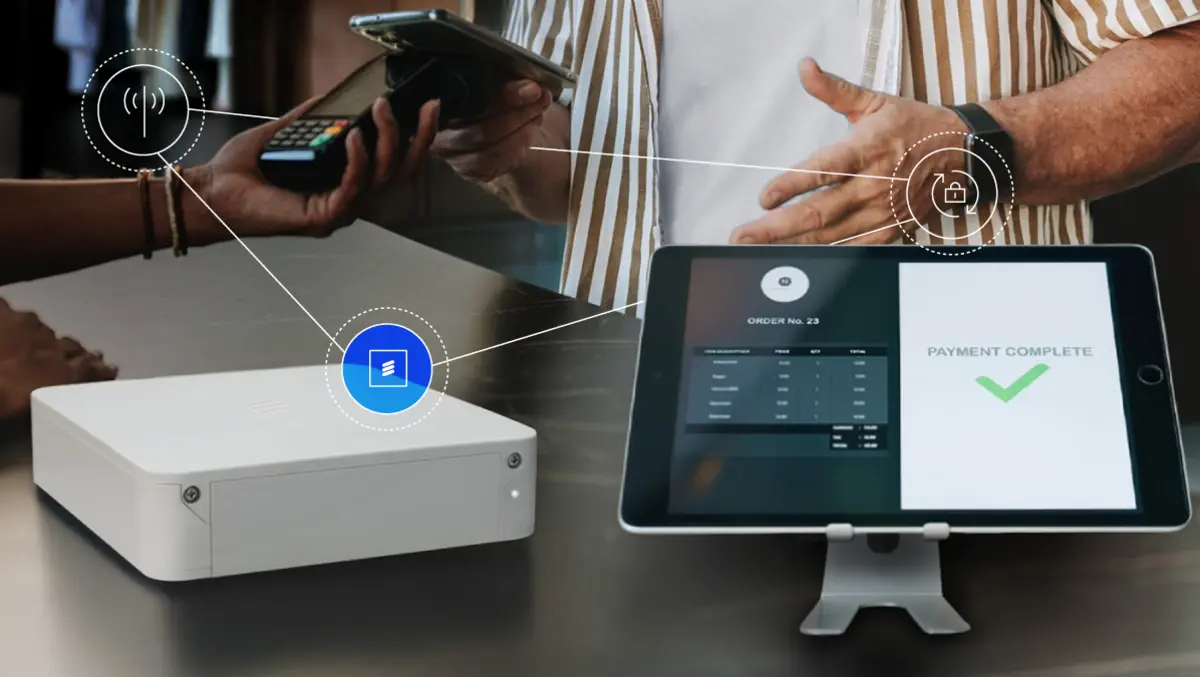
The company is targeting businesses with distributed operations in sectors such as retail and manufacturing, where network interruptions can disrupt payments, logistics and day-to-day site activity. Citing industry research, Ericsson said a major outage can cost more than USD $500,000, while more than one in three organisations put the figure at USD $1 million.
A key feature is faster carrier switching. The adapter uses dual SIM and dual standby on a single modem, allowing it to move to a standby carrier when the main link degrades, with failover times up to 10 times faster than conventional approaches.
The system also adds visibility into satellite traffic. NetCloud can detect and integrate LEO satellite traffic, giving users telemetry and basic controls within the same management layer. That allows companies to combine cellular and satellite services as part of a broader resilience strategy, particularly in areas exposed to severe weather or with limited terrestrial options.
Another feature is support for 5G standalone multi-slice deployments through User Equipment Routing Selection Policy. This would let enterprises direct priority traffic, such as point-of-sale transactions, over one carrier slice while moving less critical traffic, such as guest Wi-Fi, over another.
Ericsson has also added eSIM support and what it calls Carrier Selection Intelligence. The adapter can run speed tests when first switched on and select the strongest carrier for that location, reducing the need for site visits and manual setup.
When paired with an Ericsson E-series router, the system can scale to as many as five cellular links and four LEO links. NetCloud SASE's SD-WAN and WAN bonding functions can then manage those links across the wider network.
Brandon Butler, Sr. Research Manager, Network Infrastructure and Services at IDC, said the shift reflects growing pressure on businesses to maintain constant connectivity across many sites.
"Distributed enterprises depend on always-on connectivity across branches and edge sites-and the consequences of downtime are rising. A cellular-first, multi-WAN strategy that blends 5G with LEO satellite extends reach, adds path diversity, and keeps critical workloads online when any single link fails. Ericsson's Wireless WAN platform-combining the W2255 5G SA adapter with WAN orchestration-delivers the multi-site visibility, policy-based control, eSIM and carrier profile management, and automation needed to operate at enterprise scale. For retail, manufacturing, and other distributed sectors, this approach supports the uptime and resiliency that demanding applications-including AI workloads-require, while reducing the complexity of day-two operations," Butler said.
Juli Primeaux, Executive Vice President at GTS Technology Solutions, said customers are showing more interest in using cellular links as part of normal network operations rather than only in emergencies.
"For our customers, the ability to use cellular as an active part of their Wireless WAN from day one can offer a meaningful operational advantage. The Ericsson Cradlepoint W2255 is designed to deliver reliable, high-performance 5G connectivity, supporting the use of Wireless not just as a backup, but as a potential component in helping distributed branches stay connected and productive," Primeaux said.
Pankaj Malhotra, Head of Product and Engineering, Enterprise Wireless Solutions at Ericsson, linked the launch to the operational risks created by outages.
"Outages remain one of the most disruptive risks to enterprise operations, which is why Wireless WAN can no longer be treated as just a backup. Our strategy is to elevate cellular to a foundational and active part of the network fabric. With the Ericsson Cradlepoint W2255 and our advanced orchestration, we provide the visibility and control needed to manage 5G, satellite and primary links, giving IT teams the tools to ensure their branch networks remain online and manageable," Malhotra said.