

Older consumers most loyal to working AI customer service
Thu, 6th Aug 2026 (Today)
Parloa has published survey data showing that consumers aged 60 and over are the most likely to stay loyal to automated customer service when it resolves their issues. The findings challenge the assumption that younger users are the strongest supporters of AI in customer experience.
Its Consumer Patience Index found that nearly 90% of respondents aged 60 and above would continue using an automated system that reliably solved their problem. That was the highest result of any age group and 6.4 percentage points above the average across younger cohorts.
The figures suggest a distinction between trust in automation and loyalty to it. Respondents aged 18 to 29 were the most confident that automated systems could resolve requests accurately, with 46.5% saying they were confident or extremely confident. Among those aged 60 and over, that figure was 16.6%.
Yet older consumers placed greater weight on customer experience when judging a company. That group was 15 points ahead of the youngest cohort in saying good customer service was necessary to their view of a brand.
Age split
The widest generational divide in the research appeared in attitudes towards service that anticipates customer needs. Among consumers aged 18 to 29, 85.9% said they preferred this kind of proactive support, compared with 65.8% of those aged 60 and over.
Elsewhere, the gaps were narrower. Across all age bands, willingness to keep using automation that worked remained high, never dropping below 82%. Overall, 84.8% of respondents said they would continue using an automated system that resolved their issue nine times out of 10.
Support ranged from 82% among people aged 30 to 44 to 89.5% among those aged 60 and older. The data suggests that performance, rather than familiarity with technology, is the main factor shaping acceptance.
Employment status produced even sharper differences than age. Full-time workers were far more likely than retirees to trust AI systems with complicated requests, with 80.8% of full-time employees expressing trust compared with 57.4% of retirees.
The confidence gap was wider still. While 44.3% of full-time workers said they trusted automation's accuracy, only 13.4% of retirees said the same, creating a 31-point spread that the study described as the largest demographic divide in the findings.
Work status
Preference for human support also varied by employment status. The survey found that 39.4% of retirees rejected automation in favour of speaking to a person, more than any other employment group. By contrast, part-time workers recorded the lowest preference for human support at 18.2%.
The data also pointed to a gender gap in attitudes to AI-led customer service. Men reported higher levels of trust, confidence and comfort than women across several measures.
Trust in future AI systems to handle complex requests stood at 76.5% for men and 63.4% for women, a difference of 13 points. Women were also more likely to favour a human-in-the-loop approach, at 30.2% compared with 23.9% for men.
The study found a sharper divide in reactions to repetitive requests from automated systems. If a chatbot or phone system asked customers to repeat information, 14% of women said they would leave the interaction immediately, compared with 7.3% of men.
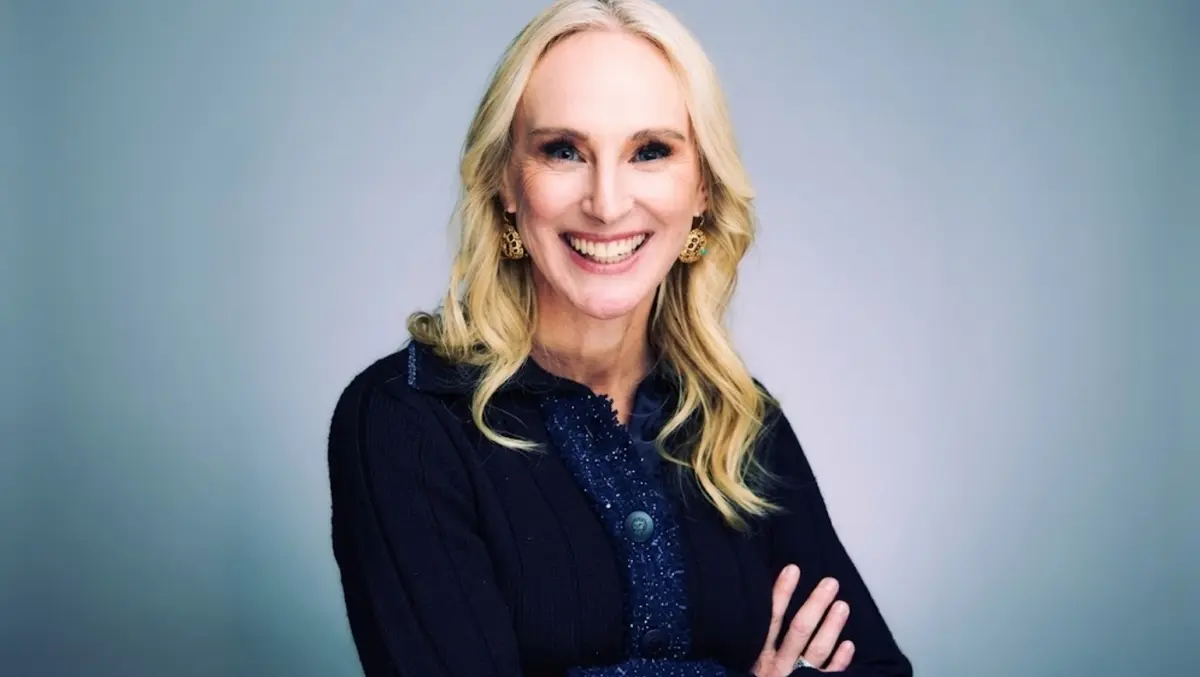
Latané Conant, chief marketing officer at Parloa, said the results showed resistance to automation was not determined by age alone. "The demographics tell an interesting story, but the real signal is that consumers aren't opposed to automation itself, including AI," Conant said.
"The group often assumed to be hardest to win over turns out to be the most loyal to automation if the technology consistently delivers. When the experience improves, loyalty to agentic CX and to the brand providing the journey follows, regardless of age."
The survey was based on responses from 1,001 adults in the United States. Parloa uses the index to measure changes in trust, patience and satisfaction with automated customer service as AI tools become more widely used.
The broadest conclusion was that consistent resolution mattered more than demographic differences. On that measure, support for automation remained above 80% in every group surveyed.
"Demographics aside, the fact is that nobody is against automation if it works," Conant said.
"The distrust is earned one broken chatbot at a time. Fix the experience, and loyalty to CX automation and to the brand follows, at any age."