

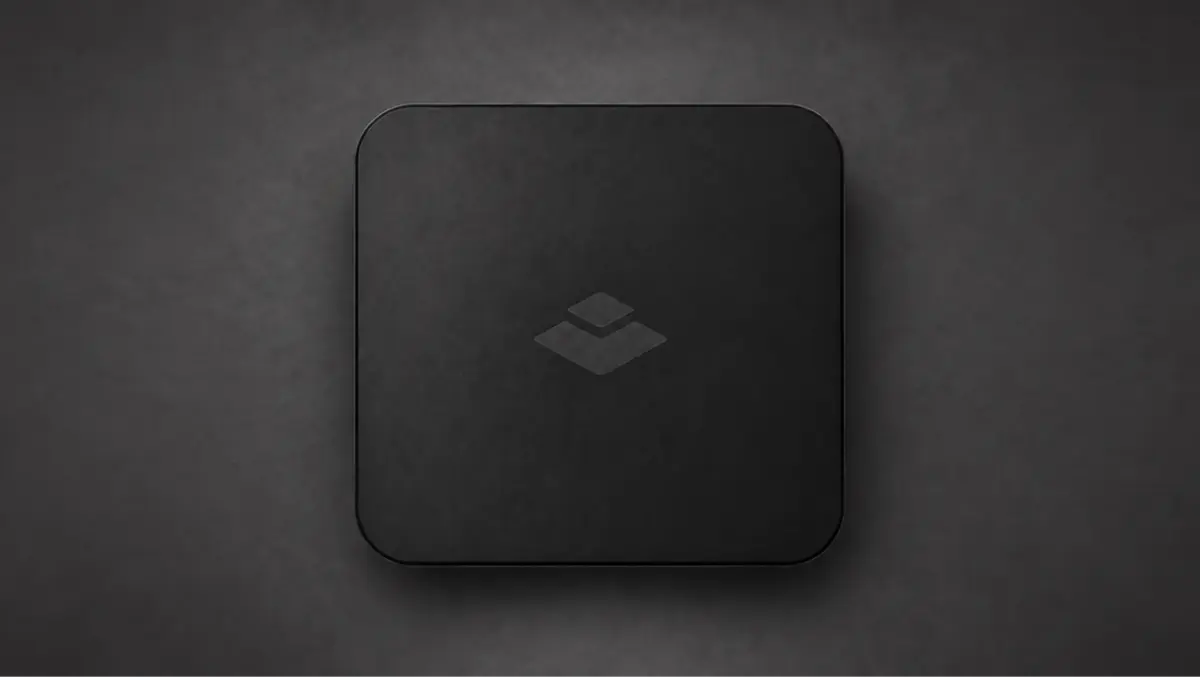
Otto launches screenless AI computer for personal agents
Tue, 10th Nov 2026 (Today)
Otto has launched Otto One, a $599 screenless computer designed to host personal AI agents. It says it has presold 12,400 units.
The launch adds a new hardware product to the growing market for autonomous AI software. Otto is positioning the device as a dedicated machine that runs agents continuously and is managed through a phone or desktop app.
Otto One runs on the company's Otto OS software and is intended to give users a separate device for AI agents, rather than relying on a laptop, phone or cloud-based service. The system lets users deploy, direct and monitor agents while the machine runs in the background.
The New York-based company says the device has no keyboard, mouse or monitor. Users plug it in, pair it with the Otto app and interact with their agent remotely.
The product is aimed at tasks that require persistent access to information and services, including household administration, budgeting, appointment management and routine business work. Agents can use a browser, filesystem, applications, APIs and system tools, along with links to more than 2,000 services.
Those services include Gmail, Google Calendar, Google Drive, Slack, Discord, WhatsApp, Telegram, Notion, Microsoft 365 and GitHub. Users can also set permissions, approval requirements, spending controls and usage limits through the app.
Security model
A central part of Otto's pitch is that the agent's memory, chat history, automations and actions remain on the device rather than on Otto's servers. Conversations between a user's phone and the Otto device are end-to-end encrypted, while Otto's servers relay unreadable ciphertext.
Some functions still rely on cloud infrastructure, including model processing, notifications, signed software updates, billing and some third-party integrations. Users who bring their own API keys send requests directly from the device to their chosen model provider.
"The computer was designed for a person to sit in front of it. Otto is the first computer designed so nobody has to," said Jake Trefethen, Co-founder and Chief Executive Officer of Otto.
"This is the most intimate computer ever built. It holds your credentials, your correspondence, your files, everything you'd hand a chief of staff. Something so personal shouldn't be rented from someone else's data center," Trefethen said.
Otto says it has generated USD $6.9 million in booked revenue in its first five months and shipped more than 1,000 units. It also says it has reached about USD $750,000 in weekly booked volume, which it says equates to an annualised revenue run rate of USD $39 million, without institutional venture funding.
The figures suggest early consumer demand for a product category that sits between AI software subscriptions and traditional personal computing hardware. Otto is also in talks with more than 10 distributors about retail expansion across Europe, Asia-Pacific, Australia, New Zealand and Mexico, while holding early discussions with enterprise customers.
Product range
Otto One is available in two configurations: 8GB of memory with 256GB of storage for $599, and 16GB of memory with 512GB of storage for $799. The machine is fanless and silent, measures 4.4 by 4.4 by 1.5 inches, and is sold without a hardware subscription.
Customers can reserve a unit with a $20 refundable deposit, with the balance charged before shipment. Customers who pay in full at reservation receive a 20% discount.
The announcement also includes Otto Pro, a separate line designed to run supported AI models directly on the device. Otto says the range uses an AMD Ryzen AI 7 350 processor and comes in three versions: 32GB of DDR5 memory with a 512GB SSD for $1,499, 64GB with a 1TB SSD for $1,999, and 96GB with a 2TB SSD for $2,499.
"Everyone is building agents that can act. What people aren't thinking about is building the part that decides what they're allowed to do, what they're allowed to spend and what needs your sign-off first," said Quinn Finney, Co-founder and Chief Technology Officer of Otto.
"That's why we've built Otto OS. The agent is the worker. Otto OS is everything a worker needs to be trusted with the job, and Otto One is the first machine it runs on," Finney said.