

Pimloc launches AI transcription tool for sensitive files
Wed, 28th Oct 2026 (Today)
Pimloc has introduced Pimloc Transcribe, an AI-based transcription product for audio and video recordings aimed at organisations handling sensitive material.
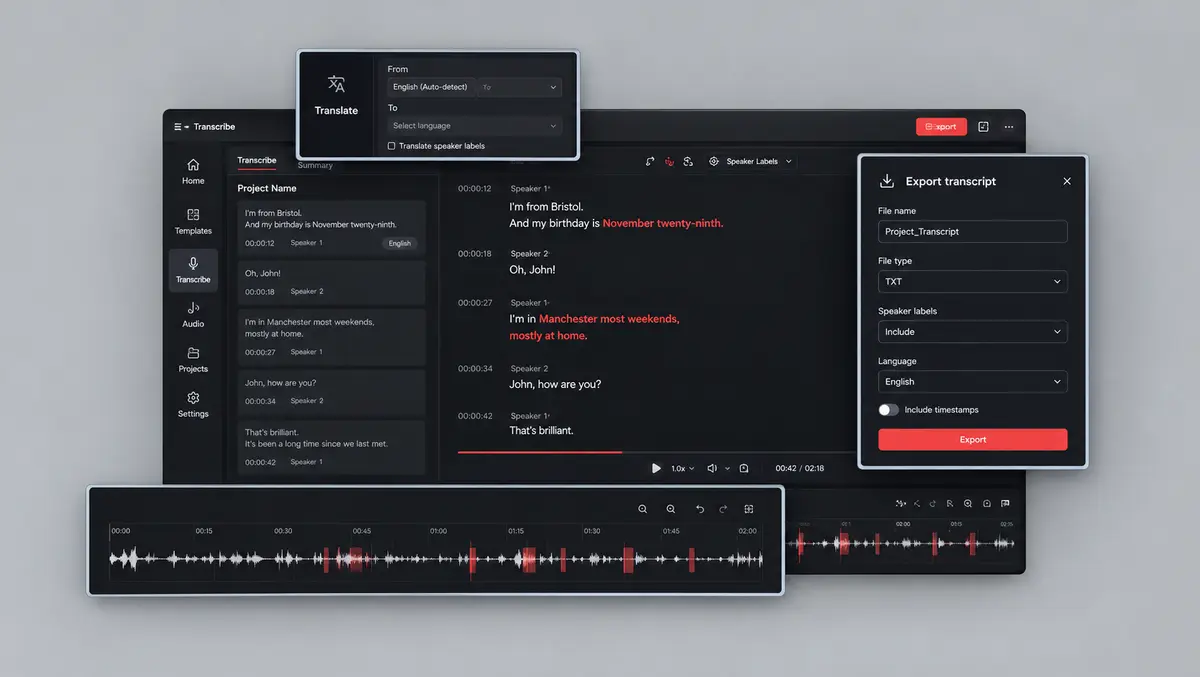
The tool converts recordings into searchable transcripts and identifies personal information that may need to be removed before files are shared. It includes automated speaker identification, timestamps, editable text, English translation and features that flag uncertain speech for manual review.
The launch adds a dedicated transcription product to Pimloc's wider platform for handling sensitive data across video, audio, images and documents. It is intended for users including law enforcement agencies, legal teams, public sector bodies and educational institutions that need to review recorded conversations, interviews, evidence and other material.
Users can generate transcripts, review them alongside original recordings and make corrections within the same system. The service also detects names, addresses, phone numbers and other personally identifiable information in transcripts, groups those items by category and lets users redact individual instances or multiple occurrences at once.
Single workflow
Pimloc is positioning the product as a way to reduce the movement of sensitive files between separate transcription, translation and redaction services. After review, transcripts can be downloaded with sensitive information permanently removed.
Users can also merge speaker labels when the same person has been identified more than once. For multilingual recordings, the tool can generate an English translation alongside the original-language transcript, reducing the need to send files to separate translation providers.
Sections of audio with lower transcription confidence are flagged for review, allowing teams to focus on passages that may need correction. That function is intended to help users manage recordings where sound quality or speech clarity affects accuracy.
Simon Randall, Chief Executive Officer and Founder of Pimloc, said organisations often need to complete several tasks with the same recording before it can be stored, reviewed or shared.
"Organisations working with sensitive recordings often need to do several things with the same file, from understanding what was said to preparing a transcript for a case or removing personal information before it can be shared," said Simon Randall, Chief Executive Officer and Founder of Pimloc.
"Pimloc Transcribe brings that work together. Teams can generate and edit transcripts, identify sensitive information and apply redactions within one platform, giving them greater control over the process and the recordings they're responsible for," Randall said.
Target users
Legal teams could use the product to prepare case files, review recorded evidence and correct transcripts without using outside transcription services. Police departments could apply it to interviews, body-worn camera footage and other recordings that need both transcription and redaction.
Pimloc already offers Pimloc Redact, which focuses on automated redaction across several media formats, and Pimloc Investigate, which is designed for searching across large volumes of footage. Pimloc Transcribe now sits alongside those products as part of the same platform.
The broader market for speech-to-text tools has expanded as organisations rely more heavily on recorded meetings, interviews and other audio and video content for documentation and internal decision-making. That has also increased scrutiny over how personal information is handled when transcripts are created, stored and circulated.
For sectors dealing with evidence, case material or regulated records, transcription errors and uncontrolled file sharing can create operational and compliance risks. Pimloc's latest product is intended to address those concerns by combining transcript creation, review and redaction in one environment rather than splitting them across separate vendors or internal systems.
Randall said accuracy and control remained central for users handling sensitive recordings.
"Whether it's a police interview, a legal proceeding or another sensitive recording, accuracy matters," Randall said.
"Teams need to be able to check what was said, make corrections and control what information is ultimately shared. Bringing those capabilities together means they can manage the work themselves, without the delays and additional handling that come with moving sensitive files between different services," he said.