


RingCentral has added tools to its RingCX contact centre platform that let supervisors manage and assess AI agents alongside human staff. The update brings AI interactions into the same management systems already used for people.
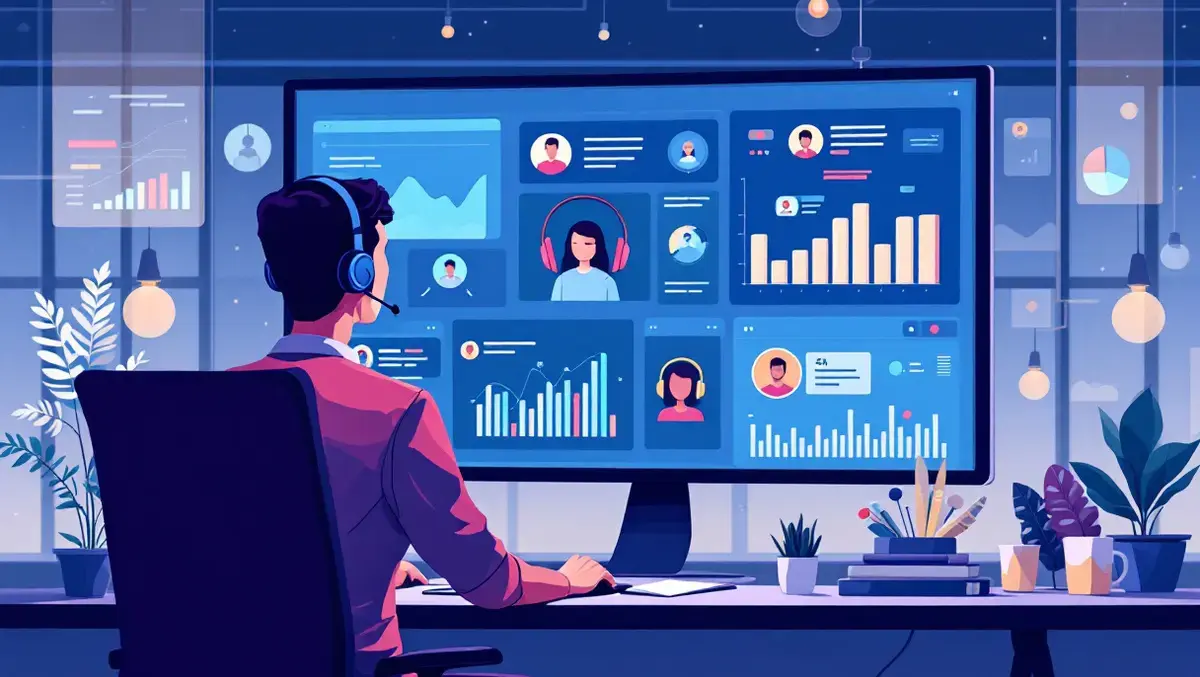
The changes give contact centre supervisors a single view of live activity, quality scoring, customer journey analysis and staffing forecasts across both AI and human agents. The new functions also cover RingCentral AI Receptionist and AIR Pro.
Businesses are increasingly using AI to handle customer conversations, but that has created new operational questions for contact centre managers. These include whether an AI agent has resolved a problem properly, when a case should be passed to a human agent, and how staffing plans should change when both types of agents work together.
RingCX now lets supervisors monitor AI interactions in real time in the same view as human-handled calls. It also scores AI interactions against the same quality rubric used for human agents and tracks the paths customers take as they move between automated and human support.
Single view
The platform also adds forecasting across AI and human capacity, allowing workforce planners to schedule both together. That is intended to help contact centres decide which enquiries should stay with human staff and which can be handled through automation.
Another part of the update is the ability to transfer conversations between AI and human agents in both directions while preserving context. This is designed to reduce the need for customers to repeat information when a query escalates or changes course.
"AI agents are becoming part of the everyday customer engagement workforce, and managing them alongside human agents presents a tremendous opportunity to improve contact center operations," said Jim Dvorkin, Senior Vice President of Customer Experience Products, RingCentral. "With RingCX, leaders see every customer conversation in one place, whether an AI agent or a human agent is handling it. They can step in sooner, hold quality to one standard, and plan staffing for the whole workforce, so more customers get their issue resolved in one go, with no need to call back."
RingCentral also outlined examples of how the system could be used in healthcare, retail and banking. In one scenario, a supervisor monitors a claim-related call initially handled by an AI agent and moves it to a human agent when empathy or judgement is required. In another, a retailer includes AI agents in seasonal workforce planning to handle routine delivery and returns enquiries outside standard hours.
For quality teams, escalation rates could provide a clearer measure of where automation is less effective. If certain call types frequently transfer from AI to human agents, businesses can reroute those interactions directly to staff at the first attempt.
Customer example
The announcement included an account from EVP Eyecare, which uses AI agents in patient care workflows.
"Having AI and human agents work together is only valuable if we can see what's actually happening across the full journey between them," said Tasha McIntosh, Senior Patient Care Manager, EVP Eyecare. "We've been finding that when a customer's request doesn't match what our AI agent expects, that gap can slip through until the patient calls back frustrated. With these new RingCX features, we'll now have one system that can catch that kind of mismatch before it becomes a bad experience, instead of after."
The broader issue for contact centres is that AI deployment has moved beyond simple self-service into a mixed workforce model. That means supervisors need visibility not only into whether automation answered a question, but also whether the customer journey ended successfully, whether sentiment changed during the interaction, and whether a handover happened at the right point.
Industry analysts say the need for that oversight is likely to grow as automated agents take on more of the contact flow.
"Bringing AI and human agents under common visibility will give businesses more confidence to begin or expand agentic AI," said Sheila McGee-Smith, President and Principal Analyst, McGee-Smith Analytics. "The next challenge will be personal AI agents: as consumers increasingly use agents to act on their behalf, contact centers will need to recognize, route, and measure both inbound and outbound AI-agent traffic. Understanding the full AI-to-human customer journey will become essential."
Alongside the contact centre changes, RingCentral introduced AI Onboarding for RingCX. The feature lets administrators describe a desired setup in natural language, after which the system creates a configuration plan, runs it through RingCX application programming interfaces and validates routing with a simulated test before launch.
RingCX is also now available on mobile through the RingCentral mobile app, allowing agents to receive and handle routed voice calls on mobile phones. The platform is also being made available within Microsoft Teams so organisations can manage contact centre interactions from the same interface used for other workplace communications.
The additions reflect a wider shift in the contact centre market, as suppliers try to show not only how AI can answer more customer queries, but also how managers can oversee automated systems using the same controls applied to human teams.