

Taara eyes US enterprise & federal market after AT&T test
Wed, 11th Nov 2026 (Today)
Taara is expanding its wireless optical connectivity offering to US enterprise and federal customers in Texas, following a deployment with AT&T that connected more than 80,000 spectators at a football final in New Jersey.
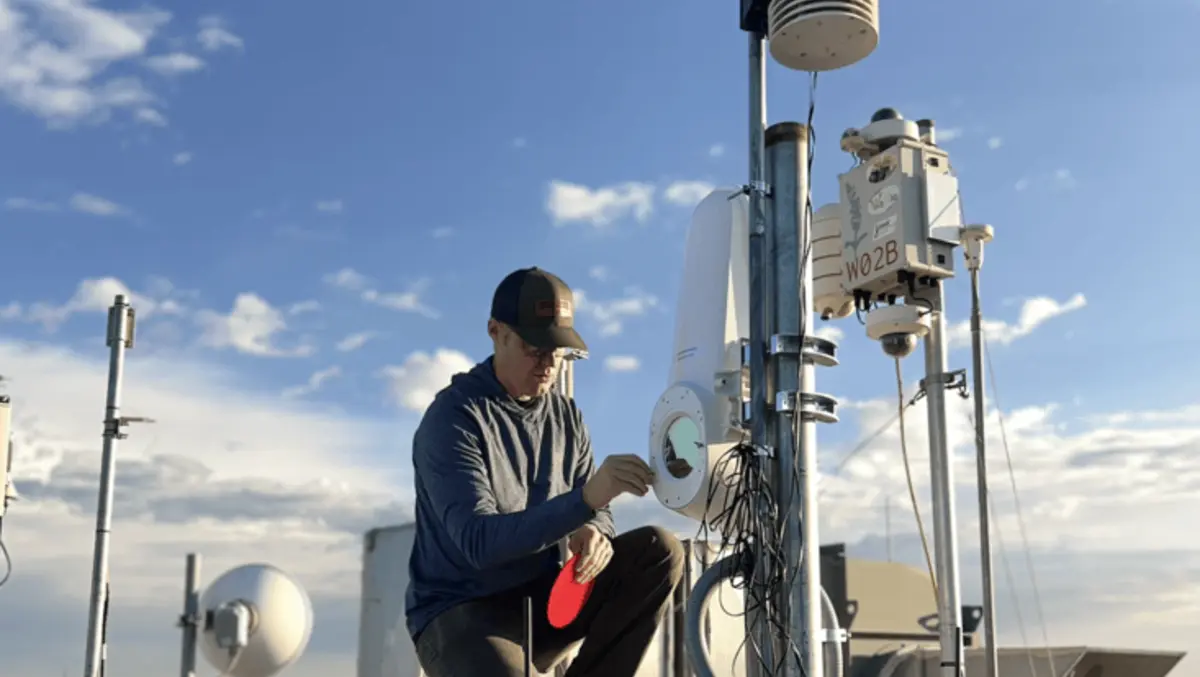
The company is demonstrating its Lightbridge system at Texas Tech University with AT&T and Nokia Federal Solutions. The setup carries data across 14km between a university rooftop and a mobile cell site at the venue.
Taara emerged from X, Google's Moonshot Factory, and is now seeking to turn a high-profile sporting deployment into broader commercial work with businesses and public sector bodies. The Texas demonstration, shown to enterprise, state and federal stakeholders, is intended to illustrate how the technology can provide an additional connection path without trenching for fibre or relying on licensed spectrum.
The system uses narrow beams of light to transmit data through the air between two terminals with a clear line of sight. Lightbridge can send and receive up to 20 Gbps over distances of up to 20km, with terminals designed for installation on rooftops or towers.
Sporting test
The latest push builds on work with AT&T at MetLife Stadium during the football final. AT&T used two Lightbridge links to connect more than 80,000 spectators, with the equipment installed within hours and delivering up to 20 Gbps during the event.
The deployment also combined Taara's optical links with a millimetre-wave radio backup, achieving 99.999% availability during the game, according to the company.
Mahesh Krishnaswamy, Founder and Chief Executive Officer of Taara, linked that deployment to the company's wider commercial plans.
"When tens of thousands of people come together for a global event, the network has to be ready when they are," said Krishnaswamy.
"At the largest sporting event in the world, AT&T deployed our links in a matter of hours. Now, we're continuing to demonstrate what that same flexibility can mean for businesses and governments. We believe the capacity to build, serve and grow should reach far beyond the places where laying fiber is practical," said Krishnaswamy.
AT&T described the sporting deployment as a practical test case for optical links under a short timetable and heavy traffic demand. The carrier is now assessing whether the same approach can support a broader range of network uses.
"Taara Lightbridge gives us another way to deliver high-capacity connectivity where our customers need it, including locations with demanding deployment schedules," said Aldo Adriazola, Senior Principal Member of Technical Staff at AT&T.
"Our special events team valued both the performance of the links at the tournament and the Taara team's technical expertise and on-site support. This demonstration builds on that experience, showing how optical links can work alongside other technologies to meet a wider range of enterprise and federal networking needs," said Adriazola.
Network option
For telecoms operators and network buyers, the pitch is straightforward: optical wireless links can offer another option where fibre is slow to build, difficult to permit or costly to extend. New fibre construction can involve lengthy rights-of-way negotiations and physical disruption along the route, even as demand for data continues to rise because of artificial intelligence workloads and other data-heavy services.
Taara also argues that wireless optical links can provide physical diversity in network design. By adding a separate path alongside fibre and other fixed connections, operators may reduce reliance on a single route, an increasingly important concern for customers seeking resilience.
Taara says it already has hundreds of links deployed in more than 20 countries, extending connectivity to communities and businesses that are difficult to reach with fibre. The Texas project is significant because it puts the technology in front of US enterprise and government decision-makers, rather than presenting it only as a connectivity tool for remote areas.
The work at Texas Tech University forms part of the institution's Critical Infrastructure Telecom Ecosystem Incubator. That setting gives Taara, AT&T and Nokia Federal Solutions a venue to show how optical wireless systems can be integrated with mobile and fixed network assets in a controlled but practical environment.
Photonics plans
Alongside Lightbridge, Taara is developing a smaller photonic module called Taara Photonics. The platform uses an optical phased array to steer and track light, and to correct for atmospheric effects through software-controlled light emitters.
The work reflects Taara's longer-term aim of reducing the size and weight of its systems while widening the number of places where they can be deployed. For now, however, the immediate commercial message is simpler: a network link using light can be installed quickly where fibre is impractical and can operate alongside existing infrastructure.
AT&T's Enterprise and Labs teams are evaluating Taara links for broader network use cases.