

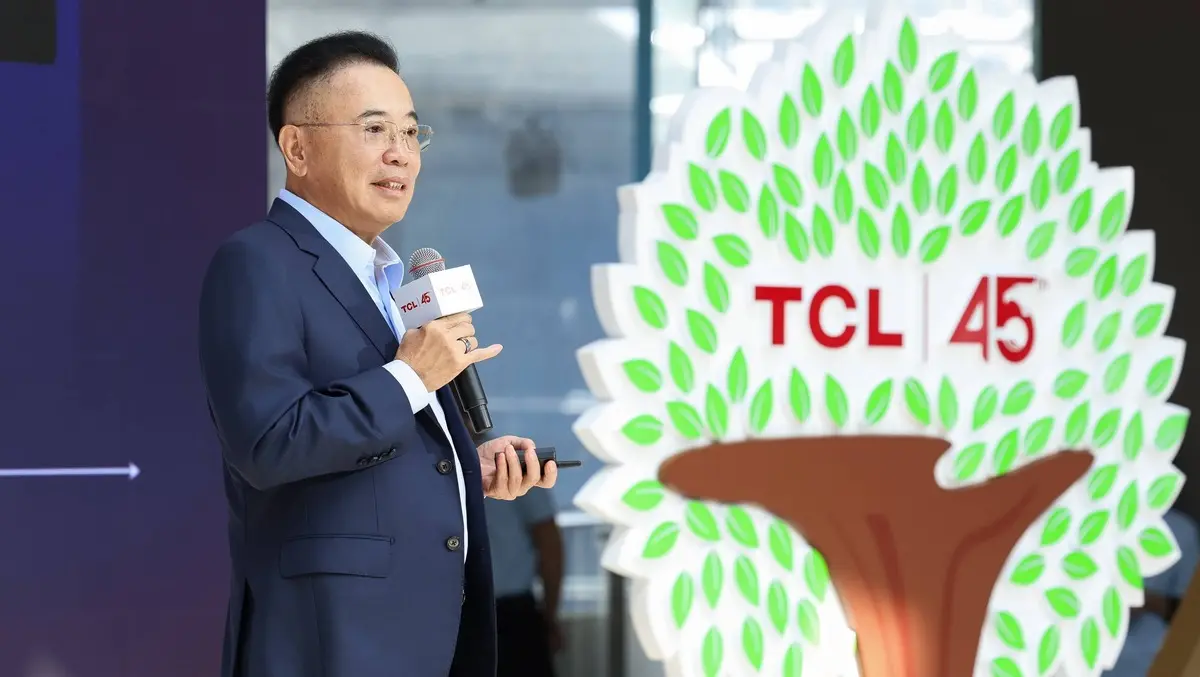
TCL opens industrial museum to mark 45th anniversary
Mon, 28th Sep 2026 (Yesterday)
TCL has opened the TCL Industrial Museum in Huizhou to mark its 45th anniversary. The museum stands on the former factory site of TTK, the business from which TCL emerged.
The site traces the company's development since its founding in 1981 and links that history to the wider rise of China's electronics industry. According to TCL, the museum spans more than 23,000 square metres, with over 9,000 square metres of exhibition space, and features more than 3,000 items across six exhibition halls and a central atrium.
Exhibits include a 1920s Nipkow mechanical scanning disk, China's first television set, China's first commercial computer and a printed OLED 4K display developed by TCL CSOT in 2024. The television gallery also features more than 100 vintage television sets from around the world.
The opening comes as TCL uses the anniversary to set out its account of how the business has changed over four and a half decades, from a local manufacturer in Huizhou into a global electronics and display group. The museum places particular emphasis on periods of industrial change, product development and corporate restructuring.
Business split
One of the central developments highlighted in the exhibition is the group's 2019 restructuring. That overhaul created two independently operated businesses: TCL Technology, focused on display and new energy operations, and TCL Industries, centred on smart devices and services.
TCL says the split sharpened the strategic direction of each arm of the business. From 2019 to 2025, revenue at TCL Technology rose from about USD $8.4 billion to USD $27 billion, while revenue at TCL Industries increased from USD $11.7 billion to about USD $24.9 billion.
The company also used the anniversary to highlight its position in several markets. It said TCL TV ranked second worldwide by shipment volume in 2025, while research firm Omdia ranked TCL CSOT second globally in overall TV panel market share that year.
In clean energy, TCL said TCL Zhonghuan is the world's largest producer of solar-grade silicon crystals and a significant supplier in the silicon wafer market. The group also pointed to external recognition in 2026, when it was named among TIME's World's Best Companies.
Industrial story
The museum's location appears intended to underline continuity between TCL's origins and its current scale. By building the institution on the site of the former factory, the company has tied its corporate narrative to a physical place associated with its start in manufacturing.
That approach reflects a broader trend among large industrial and technology groups in China, which have increasingly used museums, archives and heritage sites to frame their role in the country's economic development. In TCL's case, the emphasis extends beyond consumer electronics to display production, computing history and energy materials.
Collections such as early television equipment and commercial computing systems place TCL's story within a longer history of technological change. The inclusion of more recent display products also suggests the company wants the museum to present both historical artefacts and examples of current industrial output.
Li Dongsheng, Founder and Chairman of TCL, linked the opening to the company's future direction as well as its past. "The TCL Industrial Museum is not only about preserving the journey behind us, but also about inspiring the journey ahead," said Li Dongsheng, Founder and Chairman of TCL.
He also framed the anniversary within the company's longer development. "Over the past 45 years, TCL has grown through entrepreneurship, transformation and innovation. As we enter a new chapter, we will carry forward the same boldness and commitment to create new possibilities for the future," Li said.
TCL operates through TCL Industries and TCL Technology and says it has 50 research and development centres and 47 manufacturing bases worldwide. It also says it operates in more than 160 countries and regions.