Data center security stories
Open, interoperable access systems may spare Australian data centres costly upgrades as AI-driven demand and security needs evolve over decades.
The ranking underlines demand for security that can enforce policy across cloud, branch and data centre networks as firms decentralise infrastructure.
The ranking bolsters its pitch that enterprises need centralised controls as AI adoption widens attack surfaces across cloud and on-premise networks.
The ranking may bolster Check Point's push to sell AI-era protections into existing firewall estates as firms scramble for visibility over tool usage.
Demand for denser AI data centres is driving a new Cisco-Nvidia partnership with Supermicro, aimed at easing cooling and deployment pressures.
Forrester said perimeter-only defences no longer suffice as industrial networks become more tightly tied to enterprise IT and cloud services.
Rising breach costs and tighter rules are pushing data centre operators to unify physical and digital access, closing gaps in oversight.
Rising demand for validated AI infrastructure is driving Cisco and NVIDIA to add rack-scale support for larger enterprise deployments.
The deal lifts DXN's AI high-performance computing order book to about AUD $21 million as demand for faster-deployed modular sites grows.
Security teams face wider blind spots as ExtraHop's new sensor brings full inspection of 400 Gbps data centre traffic to RevealX.
Security teams face a widening gap as most leaders expect AI agents to outrun guardrails within a year, Rubrik said.
The shift could leave sites exposed unless firms match cyber defences with repeated identity checks at doors and restricted rooms.
Hybrid virtual firewalls can sharpen threat detection without sacrificing throughput as SonicWall weighs stateful and stateless inspection for cloud traffic.
Security teams will gain a single workflow for incidents as the new tie-up links network and endpoint telemetry across investigations, hunting and visibility.
The deal should help Fortinet boost supply chain resilience while accelerating development of its next security processor, SP6.
Security checks will now cover more Arm processors, as the chip designer broadens use of Arteris' Radix tool to spot flaws earlier.
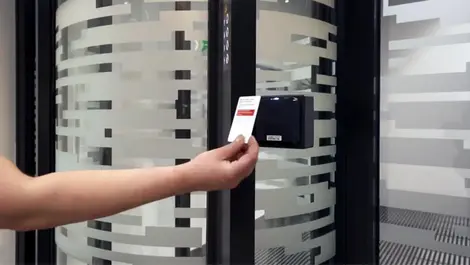
The twin portals are designed to stop tailgating and unauthorised access at a campus central to Europe's internet traffic hub.
Alert-led security teams risk falling behind as AI now needs to be built into the SOC's core to stop attacks earlier and preserve sovereignty.
The Australian security integrator is deepening its New Zealand push with local hiring after securing a major national retailer rollout and other work.
Singapore banks and telcos face a narrower window to stop AI-assisted attackers chaining small flaws into major breaches.