Defence stories
U.S. agencies can now train and keep control of AI models on isolated systems, with Palantir and NVIDIA targeting sensitive government work.
The move comes as US agencies shift from planning to implementation of post-quantum cryptography, exposing legacy systems to future quantum attacks.
The financing will fund MSAI's largest sovereign hardware deployment to date, with new compute installed in Scotland for UK-based AI customers.
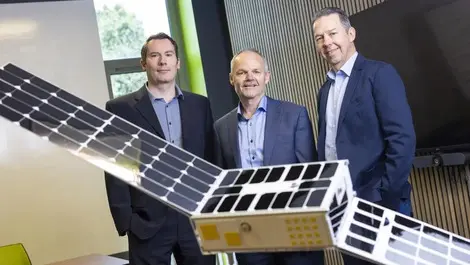
Lower costs could open satellite tracking to more assets that move in and out of mobile coverage, with plans from USD $0.99 a month.
The tie-up aims to cut Europe's reliance on overseas chip ecosystems by certifying SUSE software for Openchip's RISC-V hardware.
Students at UniSC will gain hands-on access to Siemens engineering tools as Queensland pushes to build skills for advanced manufacturing.
Regulated sectors could gain tighter control of credentials as the pair combines software and hardware to cut vendor dependence.
The funding will speed deployment of a service aimed at helping governments spot threats to cables, pipelines and shipping routes from orbit.
Operators could gain a deployable open-source 5G stack for compact small cells as the pair link OCUDU software to commercial PHY hardware.
Critical infrastructure operators face a new AI defence as EmberAI is designed to speed OT threat triage amid rising cyberattack risk.
Sovereignty concerns over data residency and cloud routing are pushing more governments and enterprises to keep device management in-house.
The system aims to bring military-grade satellite navigation protection to drones, ships and other lower-cost platforms facing rising jamming threats.
Adoption of dedicated LTE and 5G systems is accelerating, with manufacturing still dominant and 5G now taking more than half of new projects.
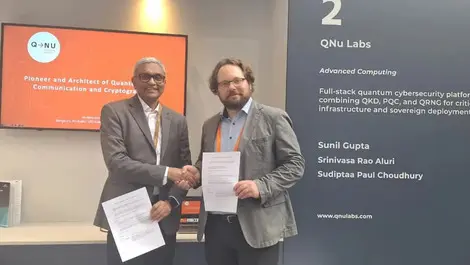
The partnerships aim to help banks and critical infrastructure prepare for quantum-era cyber risks as QNu Labs expands in Europe.
Initial full-wafer graphene runs have brought Archer closer to repeatable qubit production, with a working device still due by Q3 2026.
Applications jumped 57 per cent as the deep tech incubator backed ventures in AI, health and energy amid doubts over support for scale-up.
Remote crews in emergency and mission-critical settings can now share satellite-backed connectivity across larger field teams, Contrivian said.
The move would give Rocket Lab a recurring revenue stream and a global satellite network, as shares jumped nearly 16 percent.
More than GBP £600 million has been deployed as ministers try to stop fast-growing tech firms seeking larger rounds overseas.
Britain's tech groups could tap fresh funding and customers as Japan seeks overseas partners in semiconductors, AI and clean energy.