

Organised Crime stories
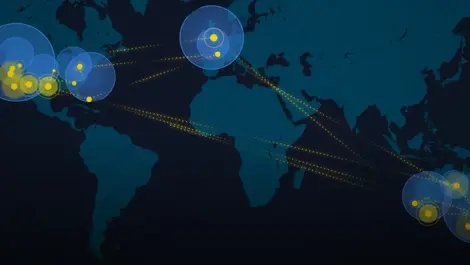
Retailers link one million repeat offenders in Auror network
This month
#
data sharing
#
auror
#
law enforcement
Auror says retailers have linked more than one million repeat offenders, with U.S. chains driving most of the cross-store crime matches.

Android banking trojan linked to Cambodia scam compound
This month
#
endpoint protection
#
surveillance
#
biometrics
Researchers link Android banking trojan to Cambodia scam compound, exposing a malware-for-hire network impersonating banks and agencies across 21 countries.

Cambodia scam compounds linked to mobile banking fraud
This month
#
data protection
#
surveillance
#
biometrics
Cambodia scam compounds are being tied to a mobile banking fraud network that hit users in 21 countries, researchers say.

World Cup guide warns banks of scams & trafficking
This month
#
data analytics
#
crypto
#
fintech
World Cup guide urges banks to spot scams and trafficking as tournament travel, ticket demand and online activity heighten fraud risks.

Auror named LPRC's most engaged partner on retail crime
Last month
#
data analytics
#
supply chain
#
risk & compliance
Auror recognised by Loss Prevention Research Council for engaging retailers and police on organised retail crime in the US.

North Korean IT workers infiltrate Western remote jobs
Last month
#
hcm
#
physical security
#
supply chain
North Korean IT workers using Western collaborators and fake identities are infiltrating remote jobs to funnel foreign salaries home.

AI-fuelled crime drives illicit funds to $4.4 trillion
Last month
#
fintech
#
phishing
#
email security
AI-fuelled scams help push illicit finance to an estimated USD $4.4 trillion in 2025, with fraud losses hitting USD $579.4 billion.

Bitdefender unmasks global Meta investment scam ads
Last month
#
phishing
#
martech
#
physical security
Bitdefender exposes 26,000 Meta ads in 25 countries pushing fake investment schemes, impersonating banks, media and public figures.

Ransomware attacks surge 50% as industrial firms hit hardest
Last month
#
malware
#
data protection
#
ransomware
Global ransomware attacks jump 50% to 7,874 in 2025, with industrial firms bearing the brunt as criminal groups reshuffle their tactics.

Israel-Iran conflict exploited in fresh email scam wave
Last month
#
phishing
#
physical security
#
email security
Scammers hijack Israel-Iran war headlines for classic advance-fee email cons, security researchers warn, urging users not to respond.

Ransomware attacks dip but NCC warns threat evolving
Fri, 27th Feb 2026
#
data protection
#
ransomware
#
iot security
Global ransomware attacks fell 17% in January, but NCC warns evolving tactics, AI and messaging apps mean risk is not receding.

Horizon3.ai names Dan Bird MBE Field CTO for EMEA cyber push
Wed, 25th Feb 2026
#
devops
#
digital transformation
#
hyperscale
Horizon3.ai appoints defence veteran Dan Bird MBE as EMEA field CTO to sharpen offensive security amid rising regional cyber threats.

INTERPOL cybercrime sweep in Africa recovers USD $4.3m
Fri, 20th Feb 2026
#
firewalls
#
network security
#
phishing
INTERPOL's Africa cybercrime blitz nets 651 arrests, seizes 2,341 devices and recovers USD $4.3m after scams linked to USD $45m losses.

Dark web 'fraud superstore' struggles with AI checks
Tue, 10th Feb 2026
#
surveillance
#
biometrics
#
fintech
Dark web 'fraud superstores' expand slick services but LexisNexis research finds AI liveness and deepfake checks still foil many scams.

DSi Compliance hires David Whipple to drive US growth
Fri, 6th Feb 2026
#
saas
#
data protection
#
surveillance
DSi Compliance taps former police captain David Whipple to spearhead North American growth and expand DS-Keywords in US law enforcement.

BioCatch posts record ARR as banks battle rising fraud
Fri, 30th Jan 2026
#
biometrics
#
fintech
#
cx
BioCatch posts record ARR above $185 million as it adds 90 banks, blocks $4 billion in fraud and expands its global trust network.

NCC warns of surge in ransomware & insider threats
Fri, 30th Jan 2026
#
ransomware
#
endpoint protection
#
pam
NCC flags fourth straight monthly rise in ransomware attacks and growing efforts by major gangs to recruit insiders and cyber staff.

Ransomware gangs step up insider recruitment, says NCC
Fri, 30th Jan 2026
#
data protection
#
ransomware
#
endpoint protection
Ransomware gangs are stepping up efforts to recruit insiders, warns NCC Group, as December 2025 attacks jump 13% to 784 globally.

Fewer ransomware gangs, but more victims in late 2025
Thu, 29th Jan 2026
#
ransomware
#
digital transformation
#
advanced persistent threat protection
Ransomware gangs shrank in number but hit more victims in late 2025, with leak-site postings soaring despite fewer active groups.

Exclusive: e2e-assure CEO on CNI defence from geopolitical cyberattacks
Fri, 23rd Jan 2026
#
firewalls
#
network infrastructure
#
digital transformation
Rob Demain warns that cyber campaigns on critical infrastructure are demanding behaviour-led defence over compliance.