

QuSecure appoints ex-CIA officer to advisory board
Mon, 22nd Jun 2026
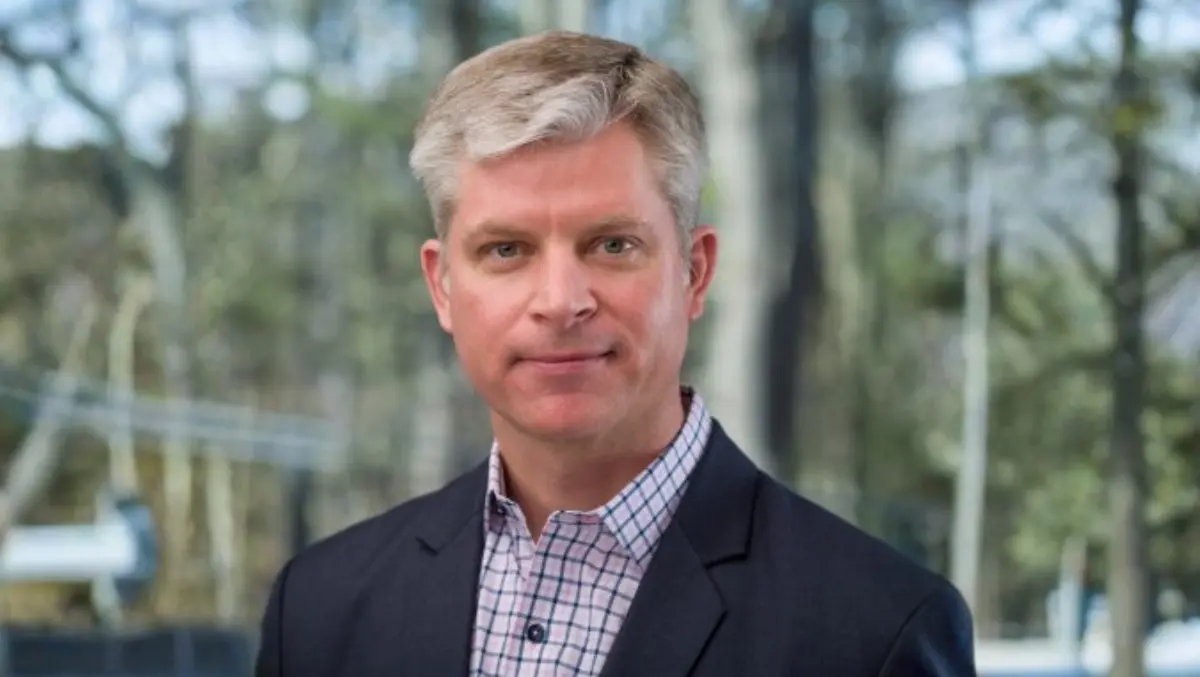
QuSecure has appointed former CIA Senior Intelligence Service Officer Eman Blair to its Federal Advisory Board as US federal agencies accelerate work on post-quantum cryptography migration.
Blair retired from the CIA in 2023 after more than two decades of service and received the Distinguished Career Intelligence Medal. Her previous roles included Chief Data Officer, Deputy Chief Information Officer, Chief of Digital Innovation for Europe and the Counterterrorism Mission Centre, and Senior Representative of the CIA Director to the Department of Defence.
Her appointment brings a senior intelligence and technology executive to a company focused on post-quantum cryptography and cryptographic management. Federal agencies are moving from planning to execution as government directives and standards begin to shape procurement and deployment decisions.
That includes the standardisation of post-quantum algorithms by the National Institute of Standards and Technology, as well as federal requirements such as CNSA 2.0. The policy framework has pushed agencies to identify systems that rely on cryptography considered vulnerable to future quantum computing attacks and to update those environments.
Federal focus
For government departments, the issue is less about a single product purchase than a broader review of how encryption is used across networks, applications, and legacy systems. Large agencies often run mixed environments across cloud, on-premises, and isolated networks, making any shift in cryptographic policy a complex operational task.
Blair's career covered several of those areas, including data, cyber, cloud adoption, and digital innovation. She also served as Chief of Leadership Development at the CIA Leadership Academy and holds graduate degrees from Durham University and the University of Maryland, as well as a bachelor's degree from Kuwait University.
QuSecure positions its work around helping organisations identify cryptographic dependencies and update algorithms and policies across their infrastructure. Its customer base includes US defence agencies, financial institutions, and critical infrastructure operators.
Brian Cunningham, Executive Vice President, Strategy & Growth at QuSecure, said Blair's background is relevant to agencies now dealing with implementation rather than early-stage preparation.
"Eman spent her career leading some of the most complex data, cyber, and technology modernization efforts in government," said Brian Cunningham, Executive Vice President, Strategy & Growth at QuSecure. "As agencies implement post-quantum requirements, her experience managing mission-critical systems at scale provides valuable insight into how organizations can modernize cryptography while maintaining operational continuity."
The appointment also reflects a wider trend in cyber and defence technology, where companies building tools for government buyers often add former senior officials to advisory roles. Such hires can help firms better understand procurement cycles, operational constraints, and the policy context surrounding national security technology projects.
Quantum transition
Quantum computing has become a growing concern for security planners because sufficiently advanced machines could eventually break some widely used public-key cryptographic methods. Even before that threshold is reached, security officials have warned of a "harvest now, decrypt later" risk, in which adversaries collect encrypted data today in the hope of decoding it in the future.
That threat model has increased pressure on agencies with long-lived sensitive data to replace or supplement current cryptographic systems. The challenge is especially acute in defence, intelligence, and critical infrastructure settings, where systems may remain in service for years and where outages or misconfiguration during upgrades can carry operational risks.
Blair linked her decision to join the board to that shift in the threat landscape and to the practical demands now facing public sector institutions.
"During my career at the CIA, I watched the quantum threat move from theoretical to near-term," said Blair. "The institutions I served and the systems I helped build are exactly what adversaries with quantum capabilities will target. QuSecure is focused on making post-quantum protection operational for the organizations that need it most. That is why I joined its Federal Advisory Board."