


The Biological Computing Co has released TBC mischief 1, a public image-to-video AI model derived from research on living neurons.
The model is available through the AI marketplaces fal and OpenRouter. TBC says mischief 1 generates video five times faster than its base model and costs half a cent per second, which it describes as the lowest price for an image-to-video model on those two platforms.
The launch expands access beyond enterprise users following TBC's earlier collaboration with Amazon Web Services. The company is now targeting creators and developers seeking lower-cost video generation for repeated testing and production work.
Model economics
According to TBC, a five-second clip costs 2.5 cents and 100 clips cost USD $2.50. The lower cost lets creators test more versions of an idea within the same budget, while making it easier for developers to add video features to products intended for regular use.
TBC built mischief 1 on Wan 2.2, which it describes as a widely used open-weight video model. It says its software matches Wan 2.2 in output quality while running five times faster and adding less than 0.1% to the base model's parameter count.
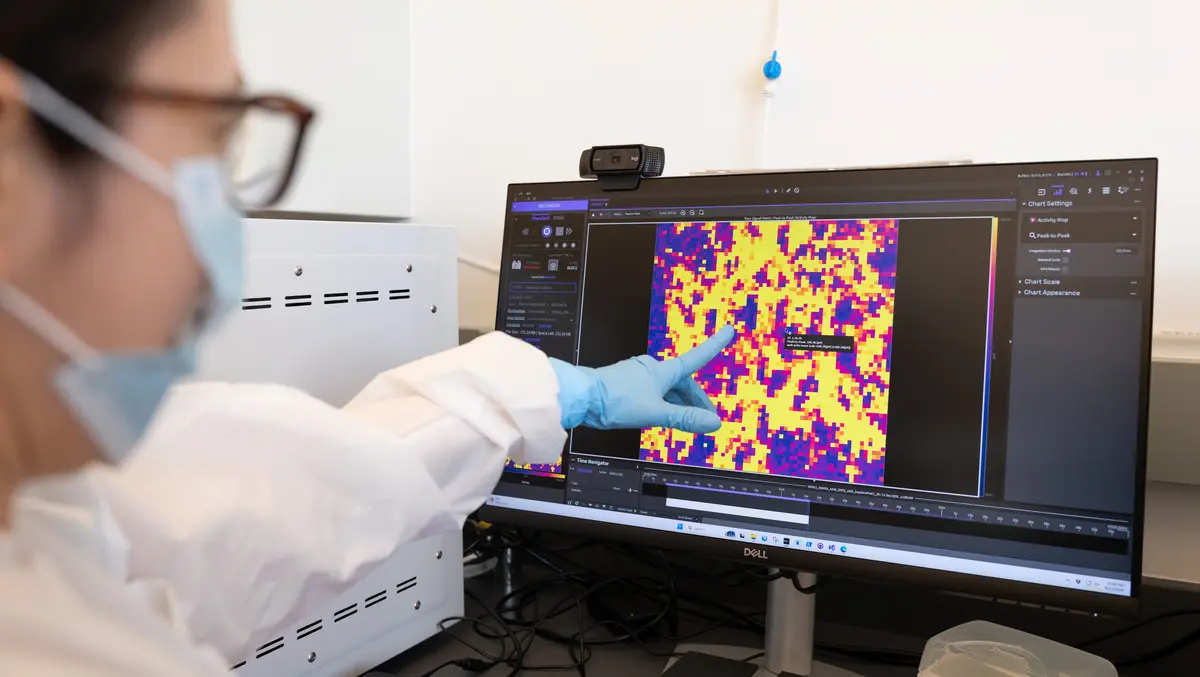
According to the company, those gains came from measurements of how living neurons process information in the lab. TBC then translates those findings into software that runs on conventional AI hardware, rather than requiring customers to use biological systems directly.
Studio test
Wonder Studios, an AI-focused creative studio, tested the model in its production process.
"Great storytelling comes from refining an idea until it's right, and that's usually the crunch point for time and budget. mischief 1's speed and cost-effectiveness meant we could push the work much further within the same time and more cost effectively," said Justin Hackney, co-founder of Wonder Studios.
"That kind of efficiency gives creatives more time for the craft and lets them stay in the flow of an idea. As this approach reaches more advanced models, it could reshape how films and commercials are made, with faster, more efficient generation that finally keeps pace with imagination."
TBC says mischief 1 is its first commercial product based on its biological computing research. It describes its broader business as using experiments on living neurons to identify computational principles that could improve the efficiency of existing AI models.
Alex Ksendzovsky, chief executive officer and co-founder of TBC, linked the launch to that broader platform.
"We said we would take discoveries from living neurons all the way to a product anyone can use, and we did it faster than anyone expected," said Alex Ksendzovsky, chief executive officer and co-founder of TBC.
"Behind this model is a discovery platform that keeps learning. Every experiment adds to our understanding of how neurons compute and gives us new opportunities to improve AI. Video is our first commercial application. We're already working to bring those discoveries to language and physical AI, with the goal of building more capable models without simply adding more compute."
Different approach
TBC is entering a crowded market for AI efficiency tools, where many improvements come from techniques such as quantisation, distillation and caching. It says its work differs because it is based on direct measurements from living neurons rather than standard inference optimisation methods.
Jon Pomeraniec, co-founder and chief operating officer of TBC, said the company sees the model as evidence of a broader commercial opportunity.
"Our first model shows what happens when we learn from biology instead of relying on conventional inference optimization alone," said Jon Pomeraniec, co-founder and chief operating officer of TBC.
"mischief 1 is our first commercial proof point. The larger opportunity is to apply these discoveries across models and workloads. We're building a platform that can change the economics of AI at scale."