

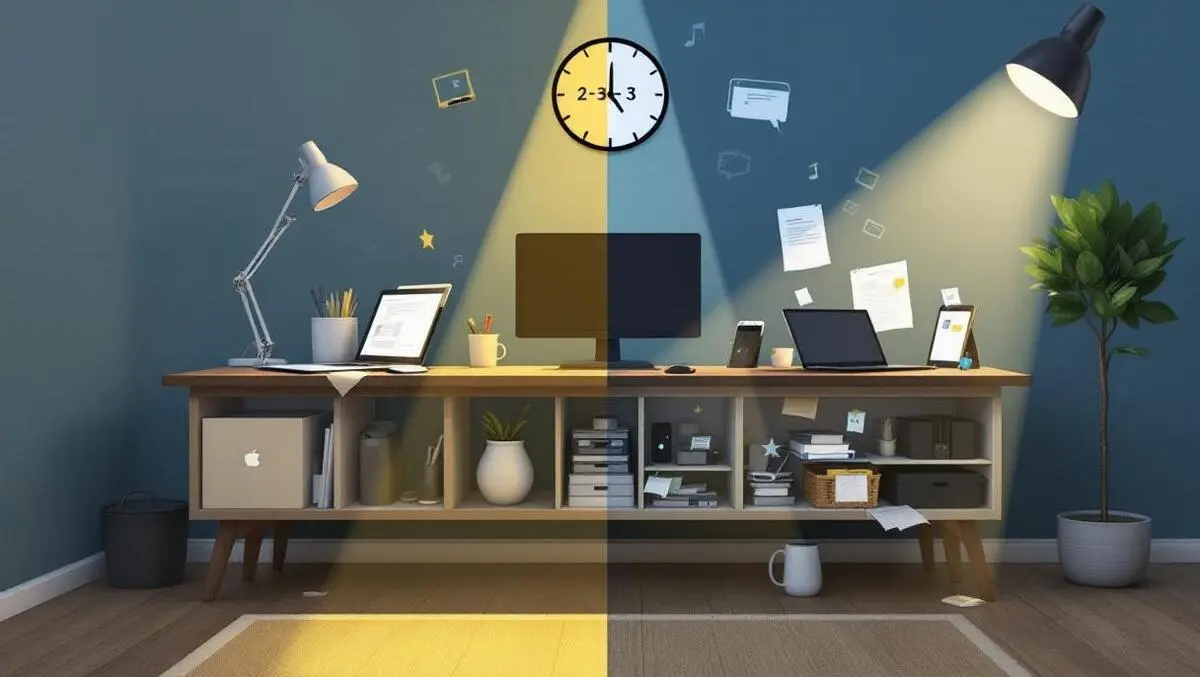

Hubstaff has published new research that puts average daily focus time for workers at 2-3 hours, based on tracked work across more than 140,000 workers in 17,000 organisations.
The company defines focus time as uninterrupted work periods without meetings, messages, or tool switching. It said its dataset shows a rise in AI adoption, alongside a decline in uninterrupted time. It also reported growth in meetings and a rise in the number of apps used each day.
Hubstaff said hybrid teams recorded the lowest share of uninterrupted work. It reported that managers and team leaders averaged 27% of hours in focus. It also said meeting volume had doubled and that employees used an average of 18 apps per day.
"Our data proves that teams aren't failing at productivity, they're working in systems that constantly disrupt focus," said Jared Brown, CEO, Hubstaff. "When a worker's day is fragmented by meetings, messages and tool switching, real focus is out of reach. If leaders want better performance and real returns on their AI investments, they need to treat focus time as a core operating principle, not simply a personal responsibility."
Meeting load
The research linked meeting growth and scheduling patterns with reduced focus time. Hubstaff said the average person now sits in twice as many meetings per year. It also said the typical organisation runs almost six times as many meetings compared with two years ago.
The company highlighted the timing of meetings as another factor. It said roughly a quarter of tracked meeting time falls during peak deep work hours. It also said nearly a third sits outside standard business hours.
Hubstaff's findings arrive as many employers continue to review office attendance policies and hybrid work patterns. In the dataset, hybrid teams recorded 31% of hours in deep focus. Remote teams recorded 41%, according to Hubstaff. In-office teams recorded 45%.
Tool switching
Alongside meetings, Hubstaff pointed to the number of applications workers use during the day. It said employees used an average of 18 apps per day, based on tracking data. It said workers in sales and marketing, customer success, and admin and HR roles averaged more than 20 apps per day.
The company argued that a larger stack of workplace tools does not automatically translate into higher efficiency. It said more tools can fragment attention. It also said workers spend time moving between apps during the day.
AI usage
The research also examined time spent in AI tools. Hubstaff said adoption is rising, but tracked time using AI is not growing. It reported that the share of total tracked time in AI apps slipped from around 4% to 3% year over year.
The company said this points to broad uptake without a large shift in how workers allocate hours. It also said AI use varies by industry and role.
Hubstaff provided additional data on workstyles and AI usage. It said hybrid teams were the only group using AI "deeply" and that their use jumped from about 5% to about 11% of the day in 2025. Remote and office-based teams spent 1-2% of their day in AI apps, according to Hubstaff.
In outreach accompanying the research, Hubstaff said engineers and developers are outpacing other roles in AI adoption. It said 87% of engineers and developers had adopted AI tools. It also said engineers and developers spend 8% of their time using them, compared with a 3% average across other roles.
Tracking approach
Hubstaff markets time tracking software for employers. The company said its platform tracks time via desktop and mobile apps. It said the software records work activity with transparency and user control. It said it analyses app and website usage, task time, and activity signals, and provides visibility into how work time is distributed across tools and workflows.
"Business leaders can't fix focus if they don't know how teams are spending their time," said Brown. "Employee time tracking data is the key to diagnosing inefficient workflows and creating a plan to reclaim focus."
Hubstaff said the dataset spans organisations across North America, EMEA, APAC, and Latin America. It said the analysis uses anonymised, aggregated time tracking data and does not evaluate individual employee performance.