Kubernetes stories
The update is designed to help engineers trace faults from infrastructure issues to affected services and customers, cutting time to resolution.
The cloud software maker is betting on AI infrastructure demand as it brings in a new Chief Executive Officer and Chief Marketing Officer.
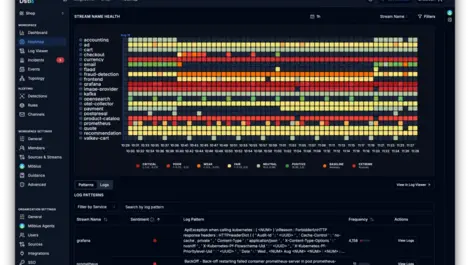
The platform meant to cut response times for teams wrestling with faster AI-driven release cycles, and one early customer surfaced 328 incidents in two months.
Enterprises will be able to keep AI agents and proprietary data inside their own infrastructure under the new SUSE-NVIDIA sovereign AI stack.
The tie-ups are aimed at making it easier for enterprises and cloud providers to run agentic AI in production across mixed infrastructure.
Supply chain compromises helped actively exploited flaws to 215 in the first half of 2026, as attackers used trusted tools and platforms to steal credentials.
The platform now underpins observability, security and research services at CERN, handling 1.4 petabytes of data across 139 clusters.
Developers can now run Temporal workers on Cloud Run, with queues scaling capacity automatically and costs falling when work dries up.
Security teams facing new risks from generative AI can now take eight hours of hands-on training on prompt injection and jailbreaks.
Nearly a third of European organisations still lack formal oversight, even as digital sovereignty and generative AI drive heavier open source use.
The two-day event will address mounting pressure on Australian teams to secure AI and Kubernetes workloads as trials move into live production.
Enterprises in Singapore, Australia and New Zealand will gain a single service to manage AI-era cloud networks across multiple platforms.
The new tools are meant to help large organisations control AI-driven coding, security and deployment as software moves from idea to production.
Malicious packages can now be blocked before they reach developers' machines, as supply chain attacks shift into AI-assisted coding workflows.
Tighter EU reporting duties are pushing open source vendors to harden supply chains, prompting four firms to join OpenSSF.
The update could reduce cloud costs and latency for autoscaling Java fleets, letting new instances reach full performance much faster on first request.
Nearly all surveyed organisations in Australia had an AI tool accessing sensitive data beyond its remit, exposing weak real-time controls.
Rising production incidents and AI governance gaps are driving demand for Komodor's platform, which lets teams run and control agents at scale.
Small firms could gain cheaper access to websites and automation as Trinetra Labs bundles AI builders, experts and a marketplace into BlueHands.ai.
Almost all surveyed firms had AI rules on paper, but 98.8% reported tools or agents accessing sensitive data beyond their intended scope.